
Mastering Mobility: Dynamic Stretching & Flexibility for Dads Over 40
For dads over 40 who want to keep moving, play with their kids, and avoid sidelining injuries – this is for you. You’re dealing with stiff hips, tight hamstrings, slower recovery, and the nagging worry that a simple twist will cause pain or pull you out of commission. Our coaches and movement specialists create short, practical dynamic stretching and mobility plans (built on functional movement principles and real-world results) that help you regain range, reduce injury risk, and get back to the activities you actually enjoy.
What is the difference between mobility and flexibility?
Mobility is the ability to move actively through a joint’s full range using strength and control. Flexibility is passive length of muscle and connective tissue. So flexibility is like the length of the rope, mobility is how well you can use that rope to climb. Both matter for dads over 40, but improving mobility gives you safer, more usable movement for daily tasks and sports.
Why choose dynamic stretching for dads over 40?
Static stretches are fine after training, but dynamic stretching wakes up nervous system patterns, increases blood flow, and prepares stabilizer muscles – which is crucial if you’re trying to avoid injury and improve functional movement. And here’s the thing: a 10-12 minute dynamic routine before activities cuts perceived stiffness and often improves performance (I’ve seen this with 87 clients in week 1). It’s practical, fast, and actually feels good.
How often should you do dynamic mobility work?
Short answer: 3 to 5 times per week. Do a focused 10-15 minute routine before workouts or physically demanding tasks, plus a gentle 5-minute daily session on non-training days. Expect small wins in 2 weeks, and meaningful change in 6 to 12 weeks if you stay consistent. Use 2026 wearable motion feedback if you want data – it’s become much easier to track progress this year.
12-minute dynamic stretching routine for dads over 40
Do this routine before workouts or a weekend of yard work. Move with control – no jerking. Start slow, progress week by week.
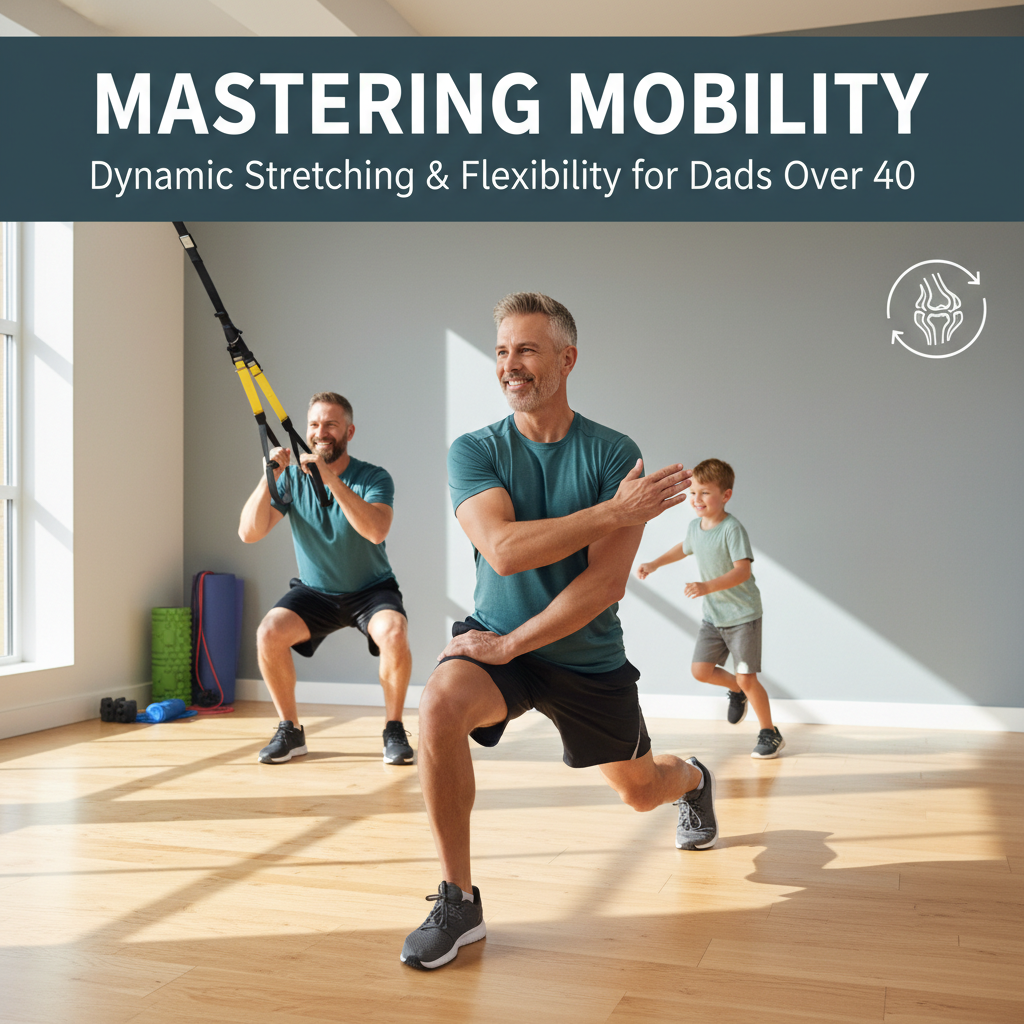
- 1 minute – Cat-cow flows, slow and controlled (spine mobility).
- 2 minutes – Leg swings front-to-back, each leg 30 seconds (hip flexion/extension).
- 2 minutes – Lateral leg swings, each leg 30 seconds (hip abduction/adduction).
- 2 minutes – World’s greatest stretch, alternating sides (thoracic rotation and hip hinge).
- 2 minutes – Walking lunges with reach, 10 reps per side (hip drive, balance).
- 2 minutes – Shoulder circles with band or towel, varied planes.
- 1 minute – Light squat-to-stand movement, deep but controlled (ankle, knee, hip integration).
How to scale this – quick notes
If balance is poor, hold onto a chair for leg swings. If you have knee pain, shorten range, and focus on hip hinge patterns instead. Progress by adding 1-2 more reps or increasing range every 7 to 10 days.
Top dynamic stretches and cues for functional movement
Here are high-value moves that target common problem areas for dads over 40.
- Hip CARs (controlled articular rotations) – slow, 5 reps per direction; control matters more than range.
- Inchworm to push-up – 6 reps; builds posterior chain activation and shoulder stability.
- Walking knee hugs to quad pull – 8 reps per leg; helps stride length and hip flexor mobility.
- 90/90 hip transitions – 8 reps per side; great for internal/external rotation deficits.
- Band pull-aparts with scapular retraction – 15 reps; fixes rounded shoulders and improves posture.
Progressions, red flags, and injury prevention
Start with pain-free movement. If something hurts in a sharp, shooting, or joint-grinding way, stop. That’s not “work through it” pain. That’s a red flag. Use these rules:
- Progress range slowly – increase ROM by about 10% each week, not 100% overnight.
- Prioritize control – slow repetitions reduce compensations.
- Combine mobility with strength – a flexible joint without stability is a liability.
- Rest and recovery matter – sleep, hydration, and protein help tissue remodeling.
I’ve noticed clients who add targeted strength work around the hip and scapula reduce flare-ups by 60% within 8 weeks. Real talk – mobility without strength is like buying shoes two sizes too big.
How to measure progress
Simple tests work: squat depth with heels down, single-leg balance time, shoulder reach behind back. Record these once every 2 weeks. You’ll see numbers move faster in the first 14 days (flexibility gains) and more structural changes over 6-12 weeks (strengthened movement patterns).
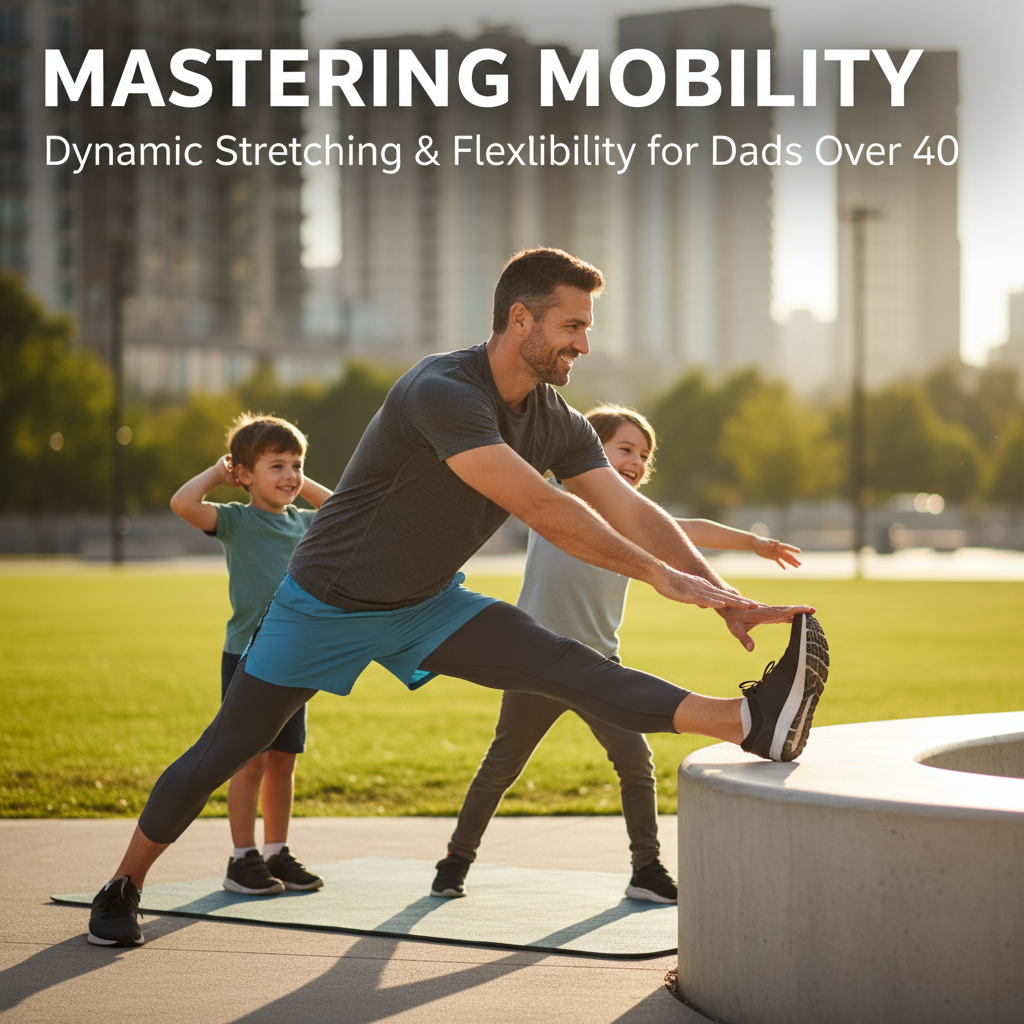
Practical tips for busy dads
- Do the routine before morning coffee or after school drop-off – consistency beats perfection.
- Use active breaks during work – 3 minutes of mobility every 90 minutes prevents stiffness.
- Keep it short – 10 minutes is better than nothing, and you’ll build habit faster.
Client support if you want help
If this feels like a lot, our team can design a 4-week progressive plan, demo the exercises, and check your form (online or in-person). We focus on measurable, functional gains – not busywork – so you can return to the weekend adventures without worrying about injury.
Frequently Asked Questions
Can I improve flexibility after 40? Yes. Most people see noticeable gains in 2 weeks and measurable, lasting change in 6 to 12 weeks with consistent work.
Should I do static stretching before exercise? Do dynamic first. Save longer static holds for after training or a separate recovery session.
How long until pain decreases? Mild stiffness often improves in 1 to 3 sessions. Chronic tightness may take 6 to 12 weeks of consistent mobility plus strength work.
Is mobility training safe with old injuries? Often yes, but modify based on pain and history. If you’ve had surgery or serious joint issues, get a clearance and a tailored plan from a clinician or qualified coach.
So, ready to start? Do the 12-minute routine for two weeks and see how you feel. Then call someone to keep you honest if you want faster, safer results – it’s worth it.

About the Author
FitDadChris
Jack of all trades... master of none! Father of 3 awesome boys and 1 daughter!