
Set SMART Fitness Goals for Fitness Over 40 with Apple Watch
For men and women over 40 trying to reclaim energy and avoid injury, this is for you — the person who's juggling work, family, and the nagging feeling that your body isn't as resilient as it used to be. You're frustrated by vague plans, inconsistent tracking, and that smartwatch sitting idle. fitdadchris.com helps translate real-world constraints into clear, science-backed plans that use tools you already own (like an Apple Watch) so you actually hit your fitness goals without burnout.
Want tactical tools and community-level motivation? Check resources like nerd fitness for movement ideas and habit builds that pair well with the Apple Watch data you'll be collecting — this combo speeds progress. Learn more about strength gains. I've seen clients over 40 go from stalled to steady: 12 weeks, measurable strength gains, less joint pain. It works. Really.
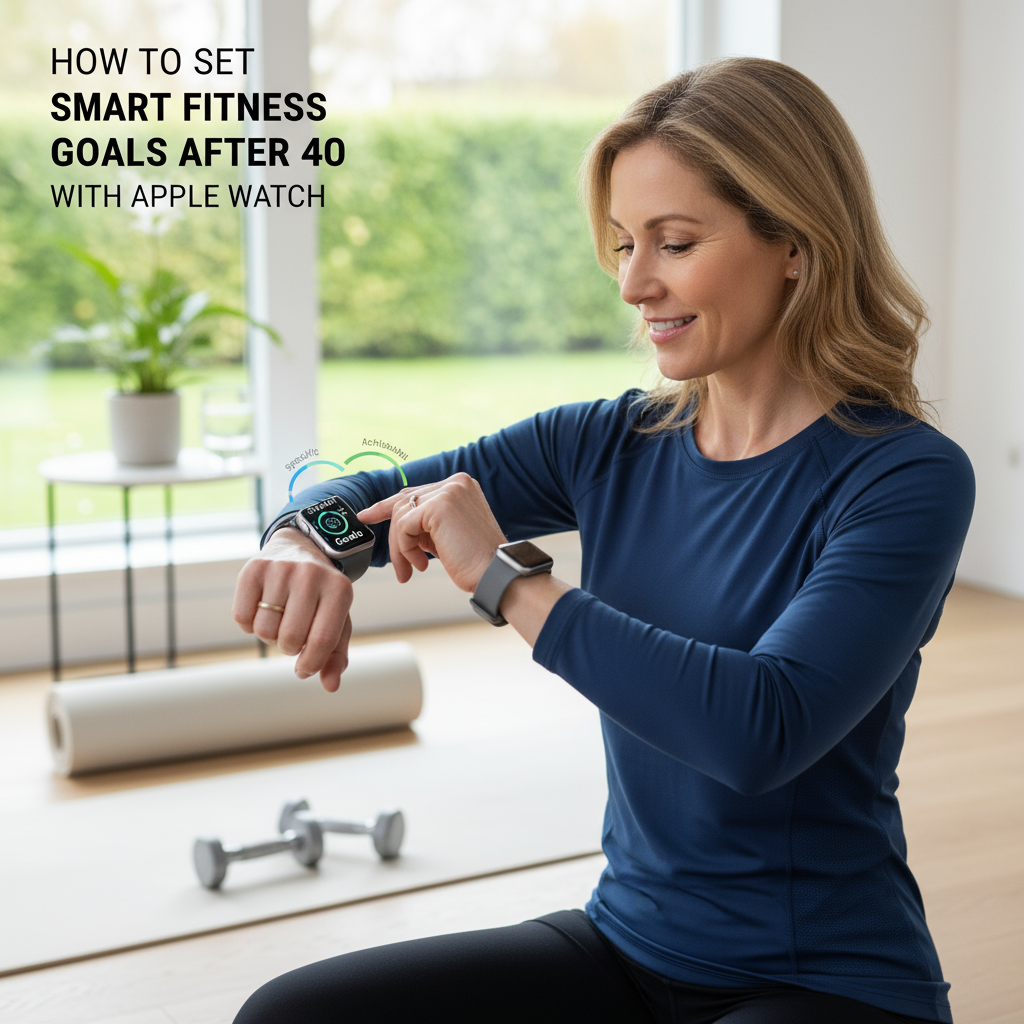
How to set fitness goals (SMART method for fitness over 40)
Set goals the smart way — Specific, Measurable, Achievable, Relevant, Time-bound. But tweak it for aging bodies: prioritize mobility, recovery, and progressive overload rather than chasing PRs every week. Here's a template:
– Specific: “Increase squatting strength by adding 10 lb to my working set.” Learn more about increase squatting strength.
– Measurable: “Track via weight logged in the Apple Watch Workout app or notes.”
– Achievable: “Start with a 5% strength increase target if you're new to structured lifting.”
– Relevant: “This reduces fall risk and helps with everyday chores (lifting toddlers, carrying groceries).”
– Time-bound: “12 weeks with weekly check-ins.”
And yes — include one recovery goal: sleep 7.5 hours nightly for 6 weeks. Why? Because recovery is the compounding effect you can't skip. From what I've seen, people who focus on recovery improve faster and stay injury-free.
How to change fitness goals on Apple Watch
Want to adjust your Move, Exercise, or Stand goals? Do this:
1) Open the Activity app on your Apple Watch (raise wrist, press crown). 2) Firmly press the screen — you'll see “Change Move Goal”. 3) Tap plus or minus to edit calories, then tap Update. 4) For Exercise and Stand, tap the goal and adjust similarly (on newer watchOS versions you can change in the iPhone Watch app too).
Pro tip: change goals gradually — don't cut calories or double steps overnight. Is it recommended to increase by 5–10% every 2 weeks? Yes, usually that works best for sustainability.
How does a pedometer help people reach their fitness goals
A pedometer (or step counter on your Apple Watch) does three big things: measurement, motivation, and micro-habit formation. Measurement gives you objective data — daily steps, active minutes. Motivation uses gamification (rings, streaks). Micro-habits turn long walks into consistent movement (take stairs, one active 10-minute walk after lunch, etc.).
Why it matters after 40: steps improve circulation, joint lubrication, and glucose control. So your pedometer is more than a number — it's an early-warning system for inactivity.
What are fitness goals examples (specifically for fitness over 40)
Examples that actually matter:
- Strength: add 10 lb to your deadlift working set in 8 weeks.
- Mobility: touch your toes (or improve hamstring flexibility by 3 cm) in 6 weeks.
- Cardio: walk 10,000 steps per day, 5 days a week for 12 weeks (or 7,500 if you're starting out).
- Body composition: lose 8 lb body fat in 16 weeks while preserving muscle.
- Recovery: average 7+ hours of sleep nightly for 30 days.
Small wins stack. One active change a day beats an all-or-nothing sprint.
Which of the following is not a short-term fitness goal?
If you see options like “lose 20 lb in 2 weeks”, “run a 5K in 8 weeks”, “improve flexibility in 4 weeks”, the one that is not a feasible short-term goal would be a massive, unrealistic target — e.g., “lose 50 lb in 4 weeks” (that’s long-term and unhealthy). Short-term goals are measurable within 2–12 weeks; anything requiring dramatic physiologic change belongs in the long-term bucket.
Describe how exercise can positively affect your environmental health.
Exercise can reduce your carbon footprint (walk or cycle instead of driving), increase awareness of local green spaces (you'll use neighborhood parks more), and lower reliance on motorized transport for short trips — small choices add up. I've read pieces on in touch timestimeshealthmag.com linking active commuting to community health benefits — it's real. So fitness isn't just personal; it's civic too.
If you want a plug-and-play approach: fitdadchris.com can craft SMART, age-aware plans tied to your Apple Watch metrics (we’ll show you how to change goals, read your pedometer output, and avoid injuries). Want help setting your first 12-week plan? Let's get pragmatic — and get results.

About the Author
FitDadChris
Jack of all trades... master of none! Father of 3 awesome boys and 1 daughter!
