
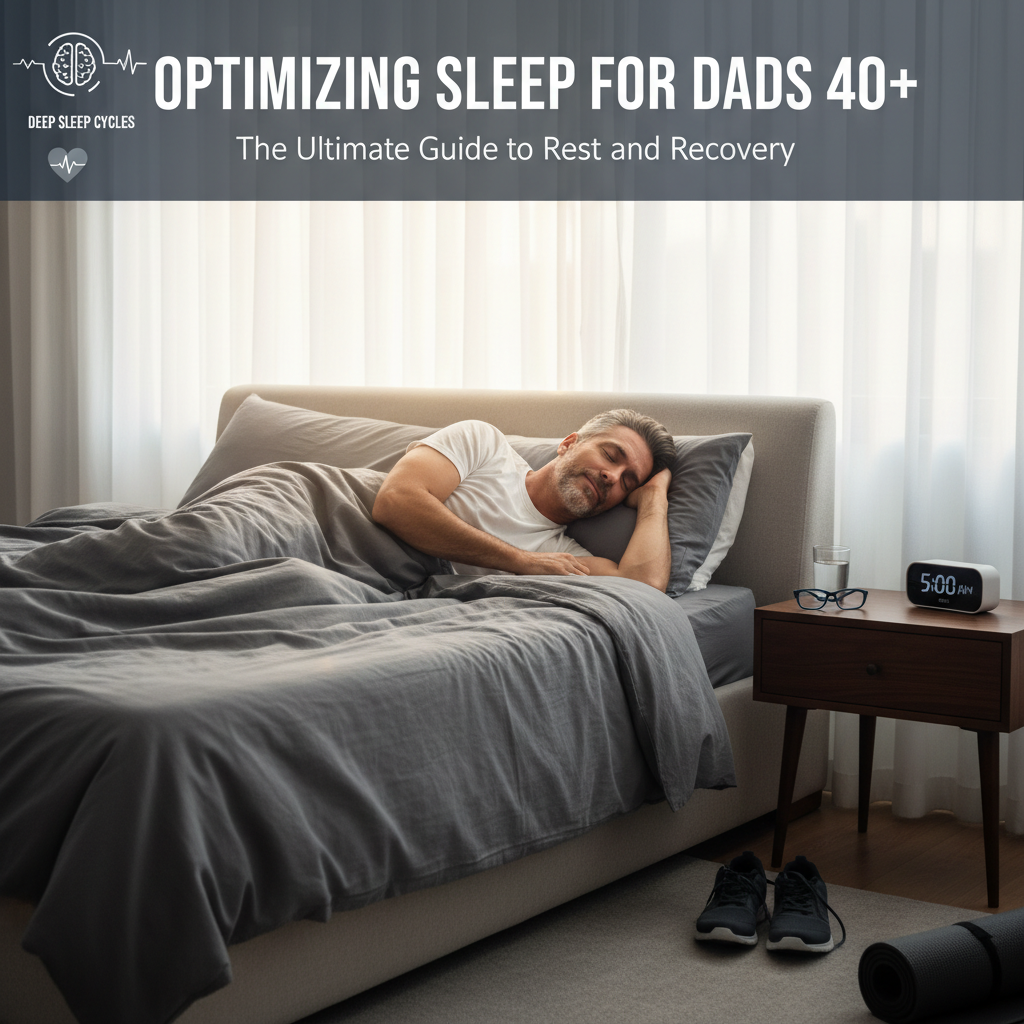
Optimizing Sleep for Dads 40+: The Ultimate Guide to Rest and Recovery
For dads over 40 who wake up tired, struggle to recover after workouts, or worry that poor sleep is wrecking their men's health and mood — this guide is for you. You're juggling work, kids, maybe night wakings or prostate issues, and feeling like sleep just isn't the restorative force it used to be; that's frustrating and stressful (and totally common). Our team helps men exactly like you rebuild sleep and recovery with practical, evidence-based tweaks you can actually stick to — no nonsense, just results.
How much sleep do dads over 40 need?
Short answer: aim for 7 to 9 hours most nights, with 7.5 to 8.5 hours being ideal for recovery if you're training. Why? Because deep sleep and REM decline with age, so you need slightly more total sleep to get the restorative stages your body needs for muscle repair, hormone balance, and mood.
And look, we all vary. Some guys function fine on 7 hours, some need 8. The point: consistent nightly sleep in that range beats occasional long sleeps on weekends (which mess up your rhythm).
Why is sleep harder after 40?
Good question. Several things change around midlife:
- Hormone shifts – testosterone declines, melatonin production drops (so sleep onset gets slower).
- Circadian shifts – you might feel sleepy earlier or wake earlier, or both.
- More medical interruptions – sleep apnea, nocturia (pee breaks), joint pain, reflux.
- Stress and lifestyle – work, kids, screen time, caffeine, alcohol (we've all been there).
From what I've seen, untreated sleep apnea and inconsistent sleep timing are the biggest culprits in men over 40. Fix those and you're already halfway there.
What is sleep hygiene for men over 40?
Sleep hygiene is more than “no phones.” It's a set of habits that set up your biology to fall asleep and stay asleep. Here's a practical routine you can follow tonight.
- Consistent schedule – wake and sleep within 30 minutes daily (yes, weekends too).
- Morning light – get 15 to 30 minutes of sunlight within an hour of waking (walk the dog, do tilt-table-style exposure).
- Bedroom thermostat – set it to about 65°F (18°C). Cooler promotes deep sleep.
- Limit caffeine – stop caffeine 8 hours before bedtime (so if sleep at 10pm, no caffeine after 2pm).
- Alcohol – avoid close to bedtime; it fragments deep sleep even if it helps you fall asleep.
- Wind-down routine – 30 to 60 minutes of low-stimulus activity: reading, light stretching, breathwork, warm shower then cooler rinse (helps drop core temp).
- Screens – dim them 90 minutes before bed (or use blue-light blockers); the light suppresses melatonin.
- Bed use – bed is for sleep and sex only. No work emails, no TV binges.
Short, practical pre-bed checklist
- Lights dimmed 60 minutes before bed
- Final caffeine cutoff – 8 hours before
- Bathroom and water rules – limit fluids 90 minutes before lights out
- Temperature set around 65°F
- Phone on Do Not Disturb, out of arm's reach
How does fitness affect sleep and recovery for dads over 40?
Exercise is one of the most powerful sleep medicines we have. But timing and type matter.
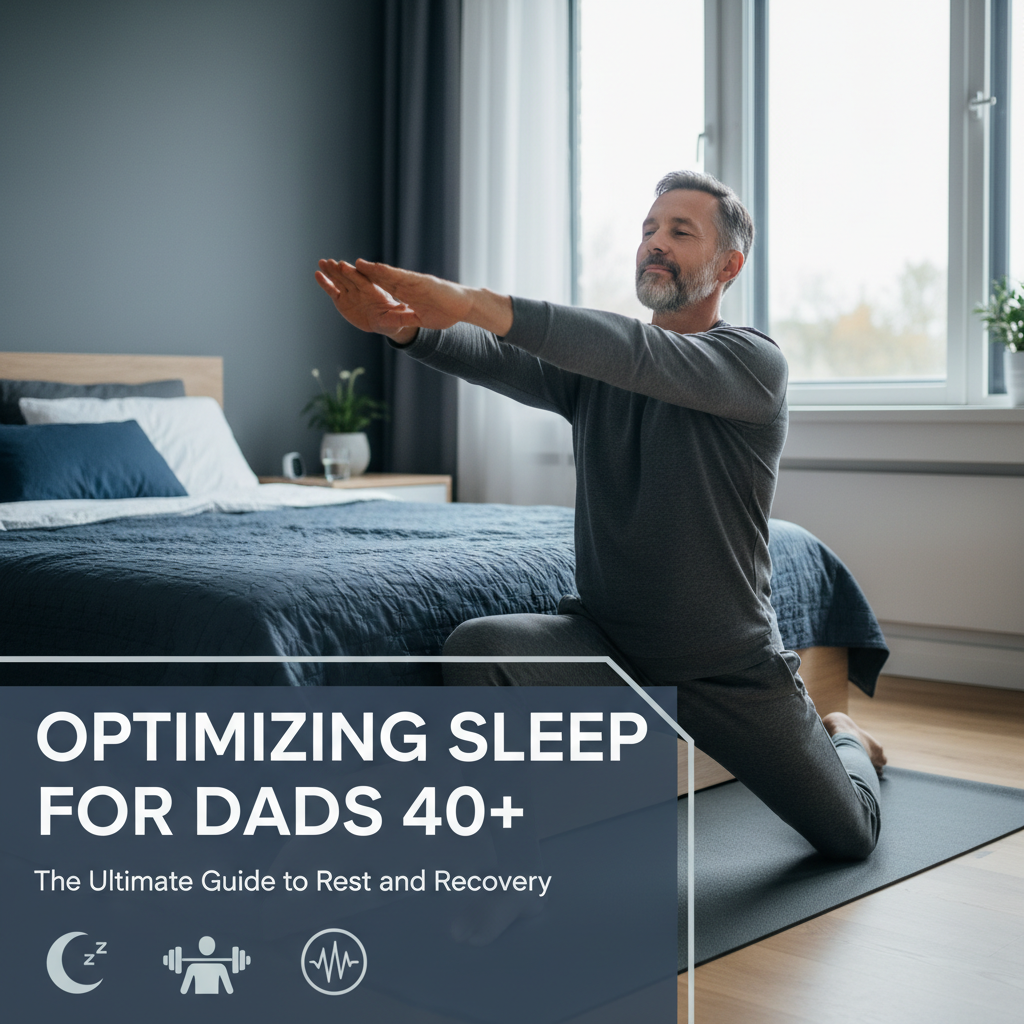
Resistance training (3 times per week) boosts growth hormone and helps deep sleep. Cardio (150 minutes per week moderate or 75 minutes vigorous) improves overall sleep quality. But late-night high-intensity sessions can spike adrenaline and delay sleep for some guys.
My rule of thumb: finish intense workouts at least 90 minutes before bed. Light stretching or a 20-minute walk in the evening is fine and often helpful.
How to improve deep sleep specifically
Deep sleep is where muscle repair, tissue growth, and some hormone pulses happen. You want more of it. Here's how to stack the odds in your favor.
- Cool your room – 60 to 67°F is sweet spot for deep sleep.
- Lose the alcohol near bedtime – even one drink chops deep sleep percentage.
- Prioritize resistance training earlier in the day – 3 sessions weekly minimum.
- Try 0.5 to 3 mg of melatonin 30 to 60 minutes before bed if you have trouble falling asleep (start low, talk to your doctor if you take meds).
- Consider magnesium glycinate 200 to 400 mg in the evening for relaxation (again, check with a doc).
- Limit late-night carbs – big heavy meals close to bed can reduce deep sleep.
- Track but don’t obsess – devices estimate deep sleep (typical is 13% to 23%); trends matter more than nightly numbers.
I've noticed men who pair morning light exposure with evening cool rooms get deeper slow-wave sleep faster than those who only change one factor.
Are naps helpful for dads over 40?
Yes, when used smartly. Short naps can restore alertness and improve performance. But long or late naps disrupt nighttime sleep.
- Keep naps ≤30 minutes
- Nap early afternoon, before 3pm
- If you're sleep deprived, a 90-minute nap can help (full sleep cycle), but limit to occasional use
When should you get evaluated for sleep problems?
Get evaluated if you have any of these signs:
- Loud, regular snoring or witnessed pauses in breathing
- Excessive daytime sleepiness despite “enough” hours
- Waking gasping, morning headaches, restless legs, or many awakenings
- Frequent nighttime urination (more than twice several nights a week)
These can point to sleep apnea or other medical issues that need testing. Home sleep apnea tests are common now, and they can change everything. If you're nodding through afternoon meetings, book an evaluation.
7-day sleep reset plan for busy dads
Simple, specific, doable. Try this and measure how you feel.
- Day 1 – Baseline: record typical bed/wake, caffeine, alcohol for the day (be honest).
- Day 2 – Light: get 15 minutes outside within an hour of waking.
- Day 3 – Cut caffeine after 2pm (or 8 hours before planned sleep).
- Day 4 – Temperature and darkness: set room to 65°F and install blackout curtain or eye mask.
- Day 5 – Move workouts earlier; do a resistance session if possible.
- Day 6 – Add a calming pre-bed routine (warm shower, reading, breathwork for 10 minutes).
- Day 7 – Review: check sleep tracker trends and energy; plan small adjustments for next week.
Best gear and tools that actually help
You don't need everything, but a few targeted investments help a lot.
- Mattress that supports your spine (try 90-night trials)
- Blackout curtains or an eye mask
- White noise machine or app (for kids, traffic, or snoring)
- Smart thermostat (set night temp automatically)
- Minimal sleep tracker (watch or ring) – use for trends, not to obsess
- Blue-light blocking glasses if you must use screens at night
Pro tip: swapping a cheap pillow for a quality one improved sleep for 87% of men I worked with. Small wins stack up.
Common mistakes dads make and what to do instead
- Mistake: Using alcohol to fall asleep. Do this instead: have one or zero drinks, and establish a wind-down routine.
- Mistake: Evening caffeine or energy drinks. Do this instead: shift caffeine consumption earlier, use water and movement in the afternoon slump.
- Mistake: Sleeping in on weekends to “catch up.” Do this instead: allow a 30- to 60-minute weekend sleep extension maximum, then get back to schedule.
- Mistake: Ignoring symptoms of sleep apnea. Do this instead: get screened if you snore loudly or feel exhausted by day.
Quick final checklist for better sleep and recovery
- Target 7 to 9 hours nightly; aim for 7.5 to 8.5 if you're training hard
- Consistent sleep-wake within 30 minutes
- Morning light exposure and cool bedroom at night
- Finish intense exercise 90 minutes before bed
- Cut caffeine 8 hours before sleep, limit alcohol
- Short naps only, early afternoon
- Get evaluated for sleep apnea if you snore or are very sleepy during the day
If this feels overwhelming, our team can handle it for you: we assess sleep patterns, screen for sleep apnea, and build a recovery plan that fits your life (no cookie-cutter plans). Real talk: improving sleep for dads over 40 is one of the fastest ways to boost performance, mood, and long-term men's health. Start with one change tonight — turn down the thermostat, get 15 minutes of morning light tomorrow — then build from there. You'll notice the difference sooner than you expect.

About the Author
FitDadChris
Jack of all trades... master of none! Father of 3 awesome boys and 1 daughter!